Gaming Addiction Across Different Age Groups
Children Aged 8 – 14
Children in this age group are the most vulnerable to gaming disorders because their prefrontal cortex, the brain region responsible for impulse control, risk assessment, and the ability to delay gratification is still early in development. Games marketed at children are deliberately designed to create habitual engagement through achievements, character progression, and social features.
Parents often underestimate the severity because the child appears to be 'just playing games' rather than displaying the dramatic behavioural changes associated with substance addiction. Key warning signs in this age group include abandoning outdoor play entirely, refusing to come to meals, aggressive meltdowns when devices are taken away disproportionate to the situation, and declining school performance attributed by the child to 'not caring.
Parental device management in this age group consistent screen time limits, device-free bedrooms, phones not in the child's bedroom at night is the most evidence-supported protective factor. Where gaming disorder has already developed, family-based treatment with a parental guidance component is the most effective approach.
Teenagers Aged 14 – 19
Adolescence is the peak risk period for gaming disorder development. Social pressure within gaming communities - team obligations, ranked match commitments, fear of letting down online friends - is a powerful driver of escalating play time that is distinct from pure pleasure-seeking. Games like BGMI, Valorant, and Free Fire have active competitive and social ecosystems where the person's standing within the community depends on consistent high-level play. Stopping feels like abandoning real relationships and real achievements, not just stopping a game.
In this age group, gaming disorder most commonly presents to Athena through concerned parents rather than the young person themselves. The teenager rarely agrees that gaming is the problem - they typically identify school, parents, or social circumstances as the problem that gaming helps them escape. Treatment must work with this dynamic rather than against it, using motivational approaches that explore the gap between the teenager's own aspirations and their current trajectory.
Adults and Working Professionals
Gaming addiction in working adults is significantly underreported because the consequences are slower to accumulate and easier to conceal. A professional who plays from 10pm to 3am every night may function adequately at work for months before the sleep deprivation, declining performance, and relationship deterioration become visible. In this age group, gaming often co-occurs with workplace stress and burnout; the game provides a complete psychological exit from professional pressure that nothing else achieves as reliably.
Adults with gaming disorder are more likely to seek help themselves rather than through family pressure, and treatment can be conducted confidentially within standard outpatient appointments without residential admission in most cases. However, the shame about gaming addiction as an adult, the belief that this is a 'teenage problem' - is itself a barrier to help-seeking that needs to be addressed directly.
India's Gaming Landscape - Why This is a Growing Crisis
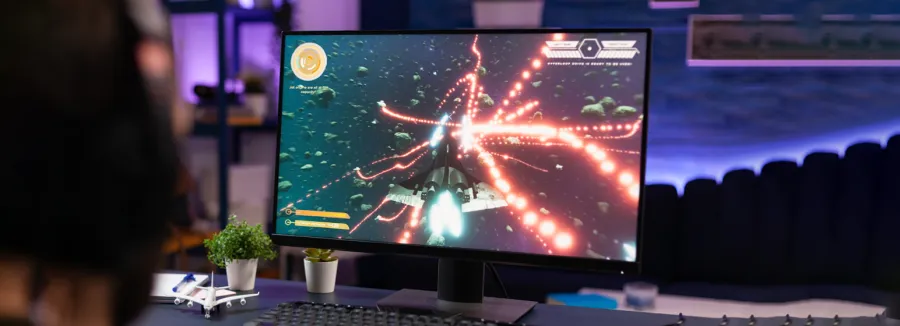
India is now the world's largest mobile gaming market by number of users. Several factors specific to the Indian context make gaming disorder a particularly significant and growing clinical concern:
Affordable Mobile Internet
India's data costs are among the lowest globally, making sustained online gaming financially accessible across income levels, including among school students and young adults with no independent income
Free-to-play Model
The dominant game design in India is free to download with in-game purchases. This creates low barriers to entry and an escalating investment psychology - having spent money on in-game items makes stopping feel like wasting that investment
BGMI (Battlegrounds Mobile India)
The successor to PUBG Mobile after its 2020 ban, BGMI is one of the most widely played games in India. Its battle royale format creates high-intensity, time-committed matches that are particularly difficult to interrupt voluntarily.
Cricket-based Gaming
Fantasy cricket games blur the line between gaming and gambling, creating a second category of gaming-related disorder that bridges to gambling addiction
COVID-19 Acceleration
The 2020-2022 lockdown periods produced a generational cohort of adolescents whose social development occurred primarily online. For many, gaming became the central social world during their most formative social years, creating patterns that have not naturally reversed
Gaming Influencers and Esports Culture
Constant exposure to gaming content can encourage longer play times and make excessive gaming appear normal or desirable
Life After Gaming Addiction Treatment - What Recovery Looks Like
Recovery from gaming addiction is not about eliminating gaming from your life permanently. It is about restoring your ability to choose to decide when you play and when you stop, without the compulsion overriding that decision. Many people in stable recovery from gaming disorder do play games again at limited, controlled times, without the loss of control that characterised the disorder period.
What changes is the relationship to gaming. The game is no longer the centre of identity, the primary social world, the main source of achievement, or the only available escape from emotional difficulty. Other things fill those roles - and gaming occupies the limited, deliberate space it was always meant to occupy.
The early weeks after reducing gaming are typically the hardest - boredom, flatness, social anxiety in offline environments, and the strong pull back to the game are all normal and expected. The clinical team at Athena prepares individuals for this period specifically, with coping strategies and offline structure in place before the gaming time is reduced, not after.
How to Support Someone with Gaming Addiction - A Guide for Families
If you are a parent, partner, or family member of someone with gaming addiction, the approaches you take significantly affect whether the person reaches treatment - and how quickly.
What Tends Not to Work
Forcing Device Removal or Destruction
This typically produces aggression and does not address the underlying condition. It also removes the family's credibility for future boundary-setting
Shaming or Lecturing
You're ruining your life over a game' produces defensiveness and entrenches the belief that you don't understand
Alternating Between Strict Limits and Giving in
Inconsistency teaches the person that persistence will eventually produce compliance, undermining every future boundary
Threatening consequences that are not followed through
Empty threats reduce the family's authority in every subsequent interaction
What Works
Contacting Athena for a family consultation before confronting the person
Preparing with clinical guidance significantly improves the outcome of the initial conversation
Expressing specific concern about observed impact rather than character judgements
'I am worried about your sleep and your college grades' rather than 'you are addicted and it's pathetic'
Having a concrete plan ready
If the person shows any openness, having Athena's number ready and an appointment available to book immediately bridges the gap between willingness and action.
Maintaining the relationship outside the gaming conflict
Not allowing every interaction to become about the gaming. The relationship is the foundation that treatment builds on
Doctors Treating Gaming Addiction Treatment



Gaming Addiction Treatment Centers
Haryana
Uttar Pradesh
Delhi NCR